Rich local libraries
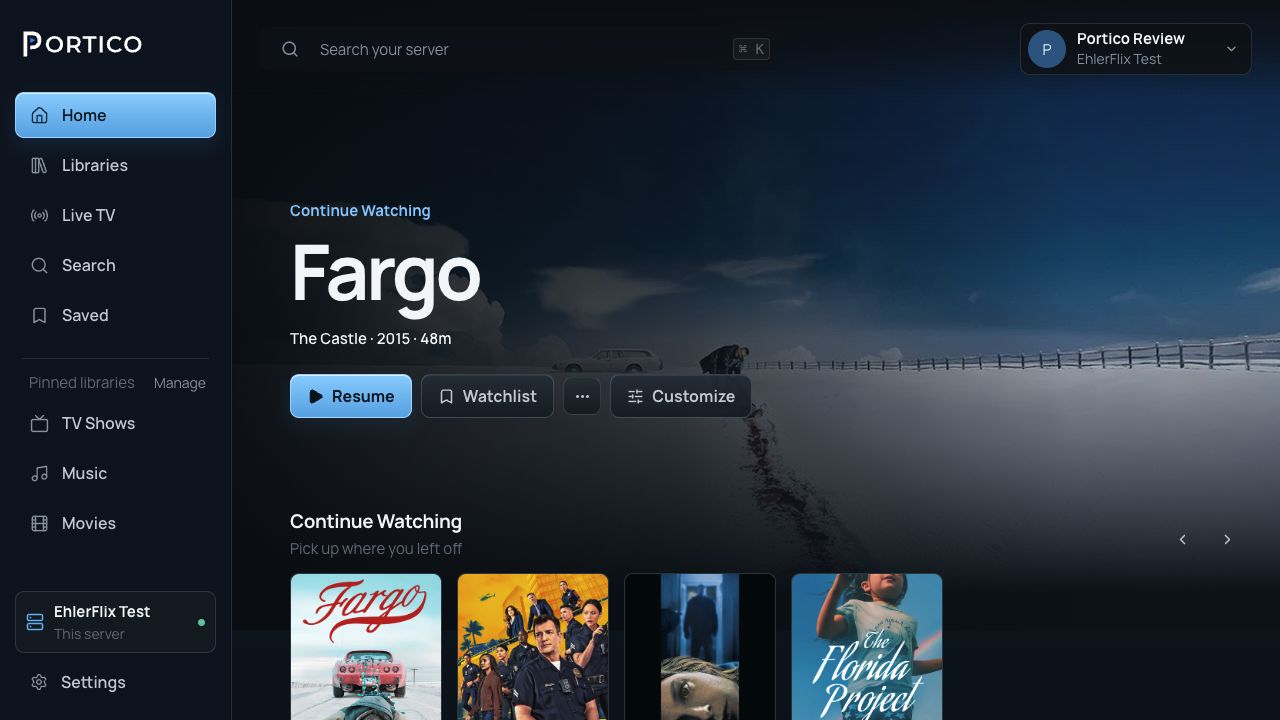
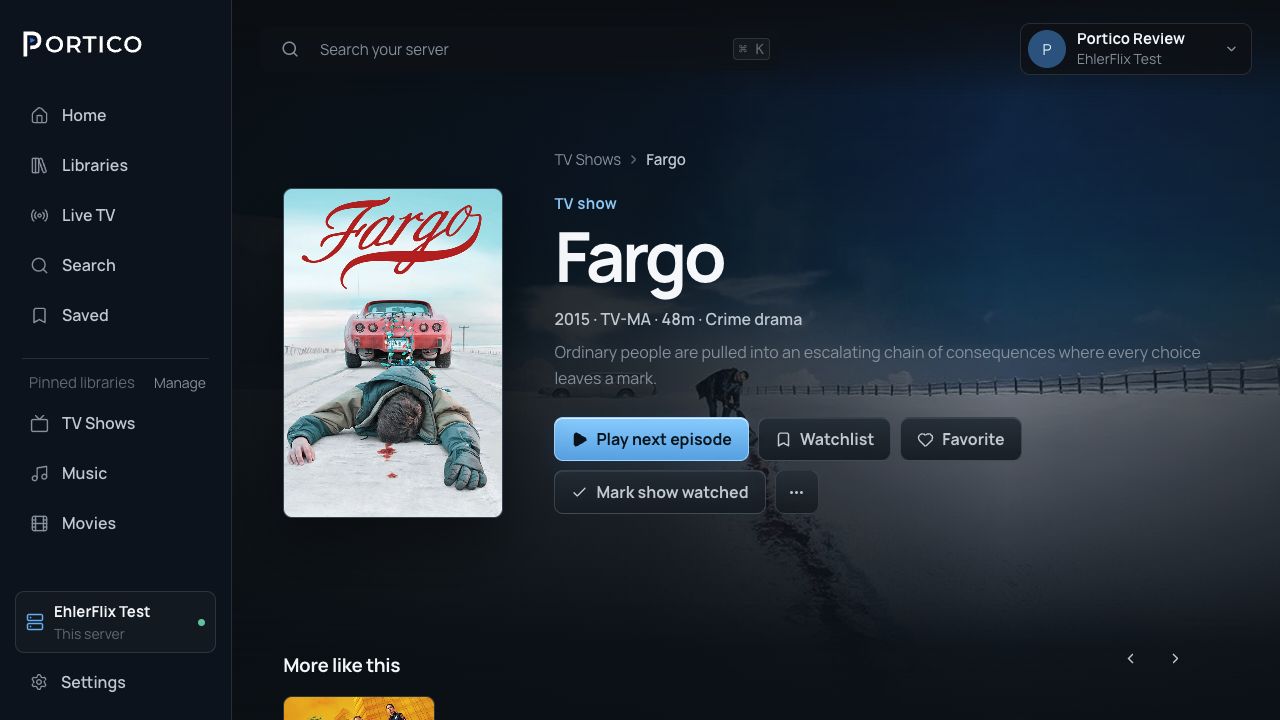
Movies, TV, anime, music, and audiobooks are modeled from the start with metadata, watch state, search, and library-specific rows.
Private media. Native clients. Direct connections.
Portico organizes the media you own, powers rich playback experiences, and keeps the local server in control across phones, tablets, browsers, TVs, and streaming devices.
Resume across devices with per-user history and permission-aware rows.
Server capabilities
Portico is designed around the full lifecycle: scan, match, organize, stream, resume, administer, and extend to native clients without losing the security boundary around your media.
Movies, TV, anime, music, and audiobooks are modeled from the start with metadata, watch state, search, and library-specific rows.
Direct play, direct stream, HLS transcoding, FFmpeg analysis, range requests, HDR handling, and resume state are part of the server architecture.
Portico supports admin-managed M3U/M3U8, XMLTV, and Xtream-style sources with guide-aware browsing and resilient playback states.
Each account gets isolated watchlists, playback history, progress, permissions, and client preferences instead of shared household state.
Library scans, users, access rules, diagnostics, transcode health, settings, and operational status belong in the same production-shaped server UI.
A versioned OpenAPI contract keeps first-party and future third-party clients aligned with the server instead of duplicating behavior.
Unified experience
The web UI is the administrative and desktop hub. Native clients use the same API contracts for browsing, details, playback sessions, remote routes, permissions, and account state.
Client apps
Portico's client roadmap covers touch, desktop, TV, and streaming-device surfaces, with each client shaped for its platform rather than stretching one web layout everywhere.
Security posture
Portico treats security as product architecture. Media, streams, settings, and history require authentication by default. Remote access is designed around direct client-to-server routes, with cloud services used for discovery and certificates rather than media relay.
Server platform
Portico's server is built as a production-shaped Go service for Windows, macOS, and Linux, with FFmpeg integration, structured diagnostics, deployment templates, and a web UI served from the same binary.